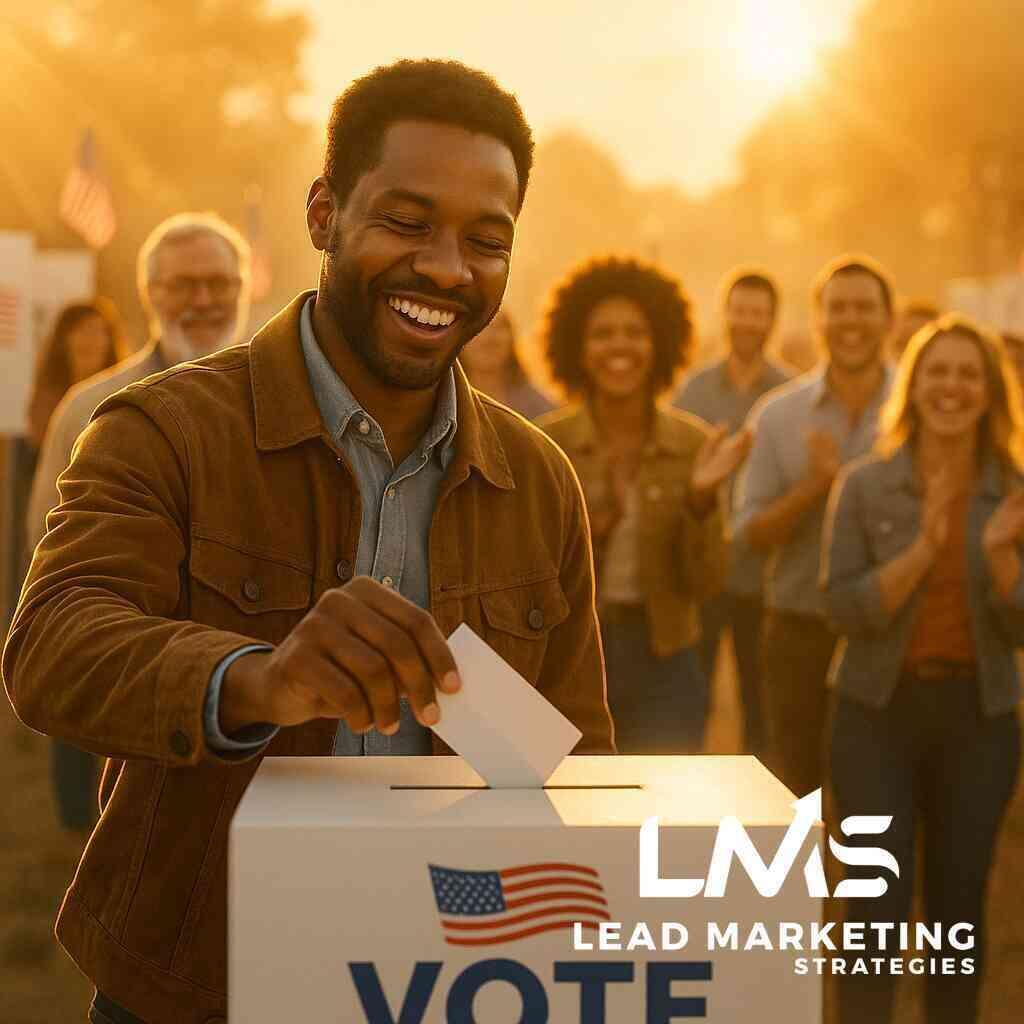

The seven most effective digital voter outreach tactics for competitive races are issue-based messaging, turnout universe targeting, texting, social media, a conversion-focused website, recurring fundraising, and strong compliance controls. In a crowded race, the campaigns that win usually contact the right voters with the right message and make every click, text, and donation count.
Key Takeaways
- Digital voter outreach works best when it starts with voter file segmentation and ends with a clear action, such as a donation, volunteer signup, or vote plan.
- Issue-based, localized campaign messaging usually outperforms generic biography ads because voters respond to specific concerns in their district.
- Texting, social media, and campaign website development should work together so voters see the same message across platforms and can act quickly.
- Predictive voter targeting and turnout universe targeting help campaigns spend less and reach more likely supporters, especially for early voting outreach, absentee ballot marketing, and GOTV strategies.
- Compliance matters on every channel. Election advertising compliance, FEC regulations, and state election laws should shape every ad, email, and text.
1) The voter message that cuts through the noise when every race feels crowded
The strongest digital voter outreach starts with one clear message that tells voters why you matter to them. In competitive races, issue-based campaign messaging beats generic biography ads because people act on local concerns, not just résumés. If you want better response rates, your message has to sound specific, useful, and local.
Why issue-based campaign messaging beats generic biography ads in competitive races
I have seen campaigns waste money on vague ads that say a candidate is “for the people” and “ready to lead.” That kind of copy does not move voters. Strong political content marketing focuses on one or two real problems, then shows how the candidate will address them through clear political advertising strategies and voter engagement strategies.
A good rule: lead with the issue, then the person, then the action. For example, a school funding message, a public safety message, or a property tax message usually lands better than a long personal bio. If you need help shaping that message, our political SEO services and campaign website design work best when they reflect the same core theme.
How localized election messaging changes response rates in Suffolk County, Long Island, and other battleground districts
Localized election messaging matters because voters in Suffolk County, Long Island, and similar battleground districts do not all care about the same thing. A coastal district may react to flooding and zoning. A suburban district may care more about schools, roads, or inflation. That is where local political marketing and race-specific campaign messaging outperform broad state-level campaign strategies.
One campaign I worked with near Commack saw a sharp lift in click-through rates after we swapped a generic “experience matters” ad for a message tied to one intersection, one school district, and one local service issue. It was not flashy. It was just familiar. For campaigns that need a sharper regional angle, our top strategies for digital voter outreach on Long Island is a useful reference.
2) The turnout universe that tells you who to contact and who to leave alone
The turnout universe is the list of voters most likely to matter, and it should guide every contact decision. Predictive voter targeting, voter file segmentation, and voter data modeling help you avoid wasted spend. If you reach the wrong universe, even strong creative and good timing will underperform.
How voter file segmentation and voter data modeling sharpen predictive voter targeting
This part is genuinely confusing for most campaigns, especially down-ballot ones. We start by sorting voters into groups based on past turnout, party history, issue scores, geography, and engagement behavior. That is how we build a practical voter contact strategy instead of a giant list that looks impressive and does nothing.
Here is the part most online guides miss: not every likely supporter deserves the same amount of contact. Some voters need persuasion. Some need reminders. Some need no touch at all until GOTV. A useful breakdown looks like this:
Voter group Best use Typical contact level High-propensity supporters GOTV and turnout optimization Low to moderate Low-propensity supporters Early persuasion and reminders Moderate Persuadable swing voters Issue-based persuasion and digital ads High Opponents Usually exclude None
If you want the technical side, our data analytics for campaign voter segmentation page explains how we translate files into action.
Where turnout universe targeting fits into early voting outreach, absentee ballot marketing, and GOTV strategies
Turnout universe targeting matters most in the final stretch, but it should start earlier. Early voting outreach works when voters know where, when, and how to vote. Absentee ballot marketing works when campaigns track requests, chase returns, and remind supporters before deadlines pass. GOTV strategies work when the campaign already knows which supporters still need a nudge.
Pew Research consistently shows that voters use digital channels heavily for news and civic information, which is why digital voter outreach has to match actual voter behavior. That is also why campaigns should build around voter outreach as a system, not a one-off push. In my experience, campaigns that plan turnout by universe, not by instinct, spend less and convert more.
3) The texting machine that turns low-intent supporters into actual voters
Texting turns passive supporters into actual voters because it reaches people where they already respond. Get out the vote text messaging, peer-to-peer texting for campaigns, and political SMS outreach work best when the ask is short, timed well, and tied to one next action. Long scripts get ignored.
When to use get out the vote text messaging, peer-to-peer texting for campaigns, and political SMS outreach
Use texting when you need speed, repetition, or a quick response. It works especially well for election day strategy, early voting outreach, and last-mile ballot reminders. I usually tell clients that texting is not a replacement for ads or email; it is the bridge between attention and action.
The strongest texts are simple:
- Identify the candidate.
- Give one clear reason to care.
- Ask for one action.
- Link to a landing page if needed.
For campaigns that want this integrated with ads and email, our fundraising email and SMS services fit well with broader digital voter outreach. Just keep compliance in mind, because opt-in rules and message timing matter.
How volunteer activation software and relational organizing keep mobile-first campaign outreach moving
Volunteer activation software keeps the outreach machine moving when staff is thin and the calendar is tight. It assigns lists, tracks completion, and helps volunteers work from phones without getting lost. Relational organizing adds another layer by letting supporters contact people they already know. That often raises trust and response rates.
I saw this clearly in a Suffolk County legislative race where older volunteers were hesitant about new tools. Once we gave them a simple mobile workflow, they started sending more contacts than the paid list ever could. For campaigns that need a broader channel mix, our digital campaign channels overview shows how texting fits into the full system.
4) The social feed strategy that wins attention without burning through trust
Social media wins attention only when it feels relevant and credible. Election social media marketing works best when paired with social media advertising for elections, because organic reach alone is too limited. The goal is not just views. The goal is voter movement.
Why election social media marketing works best when paired with social media advertising for elections
Organic posts help build familiarity, but paid distribution gives you control. That matters in competitive race campaign marketing, especially when you need to reach specific voter segments by age, geography, or issue interest. Social media advertising for elections lets you test messages quickly and scale what works. 
We often run short A/B tests on opening lines, thumbnail images, and call-to-action buttons. The winning version is not always the loudest one. It is usually the clearest one. If you want a service-level view, our social media marketing for campaigns page covers how we combine reach, targeting, and timing.
How political video production and political content marketing drive shareable persuasion on the platforms voters actually use
Video works because it compresses tone, urgency, and trust into a few seconds. Good political video production does not need a studio look. It needs a clear speaker, clean sound, and a message that feels like real life. Political content marketing then turns that video into clips, captions, and follow-up posts.
One candidate in a crowded local race used a 20-second video shot near a school entrance and a local main street. The production was simple. The response was not. That is the kind of content voters remember. Our best digital voter outreach tactics resource expands on how video, text, and ads support each other.
5) The campaign website that does more than look polished
A campaign website should convert interest into action. Candidate web design and campaign website development must make it easy to donate, volunteer, sign up, and understand the race in under a minute. If the site looks nice but does not convert, it is just decoration.
What candidate web design and campaign website development must include to convert visitors into donors and volunteers
Your website needs three things fast: a clear message, a visible action button, and trust signals. That means a homepage that loads quickly, a donation path that works on mobile, and volunteer forms that do not ask for too much. It should also include compliance basics, contact information, and an easy path to learn more.
Google’s E-E-A-T standards reward sites that show real expertise and trust. In campaigns, that means clear policy pages, candidate bios, strong internal linking, and a mobile-first build. If you are comparing options, our candidate website conversion guide explains what high-performing campaign sites include.
How targeted campaign landing pages, political email marketing, and campaign performance analytics work together
Targeted landing pages let you match one message to one audience. That is useful for endorsement campaigns, event signups, donor asks, and volunteer drives. Political email marketing then brings people back after the click, while campaign performance analytics show which messages convert.
I have found that one clean landing page usually beats five crowded pages. Keep it focused. Keep it fast. Then use analytics to refine the message. If you want a broader conversion stack, our campaign advertising services page shows how paid traffic and landing pages work together.
6) The fundraising funnel that keeps small donors coming back
Small-dollar fundraising gets stronger when it feels personal and timely. Fundraising marketing and political campaign automation help campaigns ask for money without sounding robotic. The key is to match the ask to the moment and to keep the donor experience simple.
How fundraising marketing and political campaign automation increase repeat donations without sounding robotic
Good fundraising marketing uses segmentation, not spam. A first-time donor should not get the same email as a repeat giver. Automation helps with welcome sequences, contribution reminders, and follow-ups after events or debate nights. But the copy still has to sound human.
A useful benchmark is to test subject lines, donation amounts, and send times rather than rewriting everything at once. OpenSecrets data shows how competitive financing often shapes race dynamics, so campaigns that manage donor fatigue well usually gain an edge. For a practical breakdown, see our fundraising marketing approach.
Why campaign budget optimization matters more when you are running local political marketing in Commack, New York or scaling nationwide campaign marketing
Budget discipline matters because every race has a ceiling. A Commack town race does not need the same spend as a congressional or presidential campaign, but both need smart allocation. Local political marketing should prioritize the channels that move the most persuadable voters for the least cost.
At our office near the Northgate Shopping Center on Jericho Turnpike, we often help campaigns sort spend into three buckets: persuasion, turnout, and fundraising. That structure keeps the budget from drifting. If you want a pricing reference, our political campaign marketing cost page is a good place to start.
7) The compliance guardrails that keep digital outreach from becoming a liability
Compliance is not optional. Election advertising compliance, FEC regulations, and state election laws shape what you can say, how you disclose it, and where it appears. A strong digital program protects the campaign as much as it persuades voters.
What election advertising compliance, FEC regulations, and state election laws mean for political advertising and email outreach
The Federal Election Commission requires proper disclaimers and disclosure in many paid communications, and state rules can add more layers for digital ads and email outreach. The FTC advertising guidance also matters when a message looks like promotion, endorsement, or sponsored content. That is why campaign legal review should happen before launch, not after a complaint.
I always recommend a simple preflight checklist:
- Confirm sponsor and disclaimer language.
- Review audience targeting for legal risk.
- Check email opt-outs and contact rules.
- Verify issue ads against state law.
- Archive creative and approvals.
For a trusted source, the Federal Election Commission is the starting point for disclosure guidance. If your team works across states, those rules change fast.
How political PR and crisis communication for politicians protect reputation management for politicians when a race turns rough
A rough race can turn fast. One negative story, one clipped video, or one misleading mail piece can spread through social feeds in hours. Political PR and crisis communication for politicians help control the damage before it becomes the story.
Here is the part no one likes to hear: the best crisis plan is built before the crisis. We usually set up response trees, approval chains, and holding statements in advance. If you need reputation protection as part of the package, our reputation management for politicians service is designed for exactly that pressure.
Frequently Asked Questions
How much should a campaign spend on digital voter outreach?
It depends on race level, district size, and voter competition. Local races can work with modest budgets if targeting is tight. State and federal races usually need a larger mix of ads, email, texting, and website conversion tools. The right answer is not a fixed dollar amount. It is the smallest budget that can still reach enough voters often enough to matter.
Which channel works best for GOTV strategies?
Texting usually gets the fastest response, but it works best when paired with email, paid social, and direct mail. For many campaigns, the strongest GOTV plan uses multiple touches over several days. The best channel is the one your audience actually checks.
Do I need a campaign website if I already use social media?
Yes. Social media is rented space. A website is your home base. It gives you control over donations, volunteer signups, press information, and policy pages. It also helps with search visibility and credibility.
How do I know if my voter targeting is too broad?
If your ads reach people who never donate, volunteer, or vote, your universe is probably too wide. Good voter data modeling narrows the list to likely supporters and persuadables. That usually improves response rates and lowers wasted spend.
Is political email marketing still effective?
Yes, especially for fundraising, event turnout, and voter reminders. It works best when the list is segmented and the subject lines are plain. Emails that feel personal and useful still outperform generic blasts.
What should I check before running digital ads?
Check disclaimer rules, sponsor information, audience settings, landing pages, and mobile load speed. Also review the ad for FEC and state compliance. A quick legal and technical review can prevent expensive mistakes.
Schema hint: add FAQPage markup here, along with LocalBusiness schema for our Commack location and Service schema for campaign websites, SEO, advertising, social media, fundraising, voter outreach, and reputation management.
If you need a political marketing partner that already understands voter targeting, campaign timelines, and election ad rules, Political Marketing Strategies is a strong option. I would start by reviewing your message, your turnout universe, and your website together, then tightening the channels that actually move votes. Call +18335323100 or download the Political Marketing Strategies app when you are ready to get the work organized.
Every article is written by one of our founders and independently reviewed by the other before it goes live.

Ken Key is Chief Technology Officer and co-owner of Political Marketing Strategies, where he brings full stack engineering, AI, and political SEO expertise to campaigns of every affiliation. He and his wife Dominique run the agency as a family business, and Ken has shipped his own apps on Apple, Google Play, and Amazon. He writes about practical ways to grow your political business without the fluff.

Dominique Key is Chief Marketing Officer and Co-Owner of Political Marketing Strategies, where she leads brand strategy and creative for candidates and campaigns from every party. She runs the agency with her husband Ken and brings a relationship first approach to every race. Her writing focuses on political marketing, political SEO, and political lead generation that respects voters.