The best political advertising strategies for local races use precision, not volume. If you are running a town, county, or down-ballot campaign, geo-targeting, a strong campaign website, smart social ads, layered media, and strict compliance usually outperform broad, expensive blanket spending.
Key Takeaways
- Geo-targeted political ads usually outperform town-wide spending because precinct-level targeting and voter file data let you reach persuadable voters instead of everyone.
- Candidate web design and campaign website development build trust quickly, while political campaign SEO and politician SEO help voters find you in local search.
- Election social media marketing works best when it uses short video, issue-specific posts, and paid ads tied to voter engagement strategies.
- The strongest local races combine TV ad production, radio ad creation, political video production, PPC for candidates, direct mail, and email marketing instead of relying on one channel.
- Election advertising compliance, FEC regulations, voter data analytics, and GOTV strategies can decide the final margin in close races.
-
Why geo-targeted political ads beat blanketing the whole town
Geo-targeted political ads beat blanket spending because local races are won by reaching the right voters, not all voters. In Suffolk County, on Long Island, and in smaller municipal contests, precinct-level targeting lets you spend where turnout and persuasion matter most. That is the core of effective political advertising strategies for local races.
How precinct-level targeting in Suffolk County and Long Island turns a small budget into real voter reach
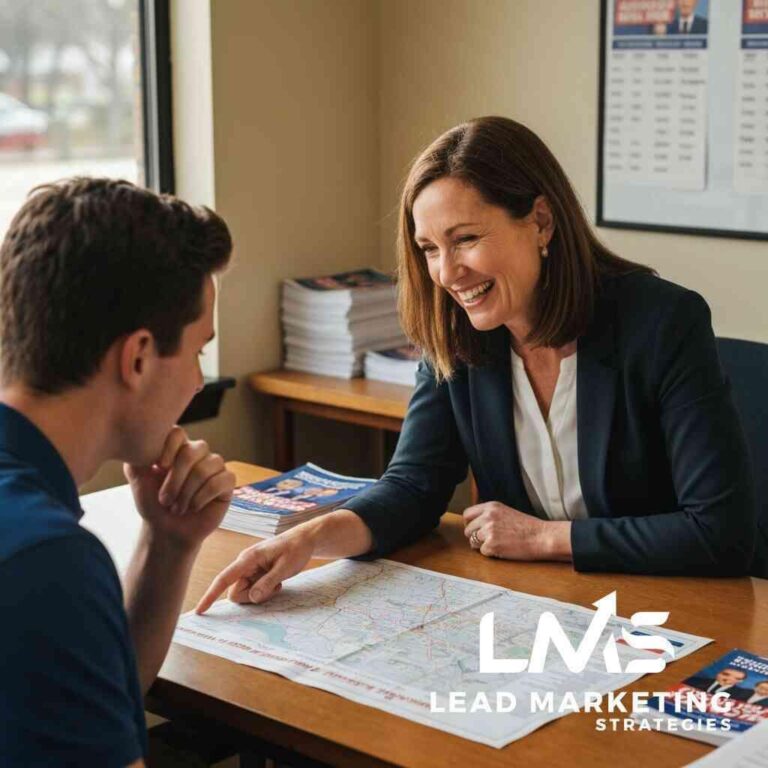
A smart local campaign starts with voter targeting, not guesswork. You map turnout history, party registration, absentee behavior, and issue clusters, then serve ads only in the precincts that can move the result. That is how campaign budget optimization works in practice, especially in Commack, Suffolk County, and nearby Long Island communities.
One town board candidate we supported had a modest budget and a crowded field. Instead of blasting every household, the team focused on three low-turnout precincts, then paired services campaign digital advertising with door-to-door volunteer follow-up. The ad spend was smaller, but the reach was sharper, and every impression had a better chance of turning into a vote.
When neighborhood-specific campaign messaging outperforms broad issue ads in municipal and down-ballot races
Neighborhood-specific campaign messaging wins when the issue is local and personal. People care more about zoning, school taxes, road repairs, public safety, and emergency response than abstract party talking points in many municipal and down-ballot races. That is why local issue-based messaging usually beats broad issue ads.
Here is what most campaigns miss: the same slogan rarely works across every block. In one Long Island race, the best response came from two versions of the same ad, one focused on traffic and parking near a commercial strip, the other focused on property taxes and drainage. That kind of community-first campaign branding is what makes hyperlocal voter outreach feel relevant instead of generic.
Targeting methodBest useMain advantagePrecinct-level targetingTown, county, and legislative racesHigher relevance and lower wasted spendNeighborhood-specific messagingLocal issue campaignsBetter persuasion and recallBroad town-wide adsName recognition onlyUseful early, but expensive fastIf you want a deeper look at local targeting tactics, our specialties in local campaign marketing show how these pieces fit together.
-
The campaign website that wins trust before a voter ever meets you
A campaign website wins trust when it answers basic questions fast: who you are, what you stand for, how to donate, and how to get involved. Candidate web design matters more than a polished logo because voters judge credibility in seconds. Strong campaign website development also supports email capture, fundraising, and volunteer sign-ups.
Why candidate web design and campaign website development matter more than a polished logo
A logo does not persuade an undecided voter by itself. A clear homepage, easy donation path, visible contact information, and fast mobile load time do. For local campaigns, the website often becomes the first real test of competence, especially for donors, reporters, and older voters who want proof before they commit.
We have seen candidates lose momentum because their site looked nice but did not work. One had a banner, a bio, and almost nothing else. Once we rebuilt the page with issue sections, a volunteer form, and cleaner calls to action, the campaign saw more responses from both donors and local supporters. If you are comparing options, our campaign websites page explains what strong structure looks like.
What strong political campaign SEO and politician SEO do for local search visibility in Commack and beyond
Political campaign SEO helps people find your name when they search your race, your issues, or your town. Politician SEO is especially useful in Commack, Long Island, and surrounding districts where local search behavior can drive early trust. If your opponent shows up first on Google, you lose ground before doors open.
Search visibility also supports reputation management for politicians. A clean site, fast pages, local schema, and issue content can help you control the story before attack pages or bad press take over. Google’s quality guidance rewards useful content, clear author signals, and trusted pages, which makes How Political Marketing Strategies Use SEO for Local Races a practical reference for campaigns that want better search performance.
-
The social media plan that keeps your name in the feed without wasting money
The best social media plan for a local race is simple, consistent, and tied to turnout goals. Election social media marketing should keep your name visible, answer objections, and move people to action without burning money on vanity metrics. Facebook and Instagram ads usually give local campaigns the clearest path to voter engagement strategies.
Which election social media marketing tactics work best for local races on Facebook and Instagram ads
Short video, issue cards, event reminders, testimonial clips, and boosted posts aimed at likely voters usually perform best. You do not need a huge creative team. You need a clear message, a local face, and a paid plan that tests different images, hooks, and calls to action. A good rule is to keep one message per ad. If you try to cover taxes, schools, roads, and endorsements in one post, people scroll past. For a useful planning framework, see How to Plan Election Social Media Marketing for Local Races, which lays out how to build a posting rhythm that supports turnout instead of just chasing likes. ### How political content marketing and social media advertising for elections support voter engagement strategies 
Political content marketing turns your campaign into a steady source of useful information. That means clips from a town hall, answers to local concerns, volunteer highlights, and direct voter reminders. When paired with social media advertising for elections, that content helps people remember your name and understand your lane.
ChannelBest roleTypical useOrganic postsTrust and familiarityCommunity updates, endorsements, event photosPaid social adsReach and persuasionTargeted turnout and persuasion messagesShort videoAttention and recallIssue explainer, candidate intro, contrast adThe campaigns that do this well usually mix social media marketing with our political social media services and keep testing what voters actually watch. That matters in local races more than almost anywhere else.
-
The ad mix that persuades voters when yard signs cannot do the whole job
Yard signs build presence, but they do not persuade on their own. The stronger mix for local races blends TV ad production, radio ad creation, political video production, PPC for candidates, direct mail, and political email marketing. That combination reaches people in more places and gives your message repeated exposure.
How TV ad production, radio ad creation, and political video production fit into local political advertising strategies
Television and radio still matter when a race needs broad familiarity fast, especially in countywide or state-level election marketing. TV ad production works well for credibility, while radio ad creation can reach commuters and local talk listeners who still follow politics closely. Political video production, meanwhile, can be cut down for web ads, CTV, and social feeds.
The key is message discipline. One ad should do one job: introduce, persuade, or contrast. We worked with a candidate whose strongest clip was only 20 seconds long. It showed a real neighborhood street, one simple promise, and a direct ask. That beat a longer spot with too many claims. For campaigns that need support here, Why Political Marketing Strategies Win Local Elections gives a clear sense of how media fit into a larger plan.
When PPC for candidates and digital voter outreach should support direct mail, email marketing, and fundraising marketing
PPC for candidates works best when it supports the rest of the field program. Search ads can catch people who are actively looking for your name, your ballot line, or your issues. Digital voter outreach then pushes those same audiences toward volunteer forms, donation pages, and voting reminders.
Direct mail still matters because it lands in the home. Political direct mail gives older voters and low-frequency voters a tangible reminder, while political email marketing keeps supporters moving toward action. If money is tight, start with the channels that match your strongest audience segments, then layer in fundraising marketing once the message is working. Our fundraising marketing service page covers how donation messaging and voter contact should connect.
-
The compliance and data layer that keeps a local race from slipping at the finish line
Compliance and data are not side issues. They are central to modern local campaigns. Election advertising compliance and FEC regulations shape disclaimers, sponsorship language, audience rules, and digital ad tracking. At the same time, voter data analytics and political audience segmentation tell you where the final votes are likely to come from.
How election advertising compliance and FEC regulations shape every message, disclaimer, and audience segment
Every ad needs the right disclaimer, the right sponsor identification, and the right records behind it. The FEC explains the basics clearly, and local campaigns should also watch state and platform rules for digital ads, file retention, and issue advocacy. For federal reference, use the Federal Election Commission and cross-check platform policies before launch.
This is where crisis communication for politicians also matters. A sloppy disclaimer, a misleading image, or a poorly timed negative ad can create more trouble than it solves. If your team is handling a ballot measure, a local issue fight, or an attack-heavy race, reputation management for politicians should be built into the workflow from the start.
Why voter data analytics, political audience segmentation, early voting outreach, and GOTV strategies decide the final margin
The final margin in a local race often comes from turnout, not persuasion alone. Voter data analytics helps you see who has voted, who is likely to vote early, and who still needs contact. Political audience segmentation then tells you which people need an email, a door knock, a mail piece, or a reminder text.
That is where early voting outreach, absentee ballot marketing, and GOTV strategies pay off. We have seen campaigns gain ground late simply by tracking ballots returned and shifting contact toward supporters who had not yet voted. If you want a practical starting point, our voter outreach page shows how turnout programs connect to field and media.
If you want a team that focuses only on political work, Political Marketing Strategies is a strong fit because it pairs campaign websites, SEO, advertising, and turnout support with real political experience. Based near the Northgate Shopping Center in Commack, they work with local races across Long Island and nationwide, and they offer an app that makes project management and collaboration much easier.
If you are planning a local race, review your targeting, website, social ads, media mix, and compliance checklist now. Then call +18335323100 or download the Political Marketing Strategies app and get your campaign assets organized before the next round of ads goes live.
Frequently Asked Questions
Question: What are the most effective local political advertising strategies for a town, county, or down-ballot race?
Answer: The strongest local political advertising strategies are the ones built around precision, not volume. In most municipal campaign marketing and down-ballot campaign advertising, that means combining geo-targeted political ads, precinct-level targeting, and hyperlocal voter outreach with a clear campaign messaging strategy. Instead of spending broadly, Political Marketing Strategies helps campaigns focus on the voters most likely to move the race through voter targeting techniques, data analytics for campaigns, and voter audience segmentation. We also layer in election social media marketing, political direct mail, political email marketing, and voter mobilization tactics so your message reaches people in multiple places. That mix is especially effective when paired with election campaign management, campaign budget optimization, and local issue-based messaging that speaks to taxes, roads, schools, safety, and other community concerns.
Question: How can the blog post Top 5 Political Advertising Strategies for Local Races help my campaign build a stronger plan?
Answer: Top 5 Political Advertising Strategies for Local Races is designed to show campaigns how to build a practical, affordable, and winning local marketing plan. The five strategies covered in the article are not theoretical; they are the same building blocks we use in political marketing services for real campaigns. That includes campaign website development, candidate web design, political campaign SEO, social media advertising for elections, TV ad production, radio ad creation, political video production, and PPC for candidates when the race needs broader awareness. It also explains why election advertising compliance and FEC regulations matter at every step, especially when you are running ads across digital platforms. For campaigns that want a trusted partner, Political Marketing Strategies can help translate those ideas into a full election campaign management plan with political brand development, digital voter outreach, and GOTV strategies built around your district.
Question: Can Political Marketing Strategies help with candidate web design, campaign website development, and political campaign SEO?
Answer: Yes. A strong campaign website is one of the most important tools in local political advertising strategies because voters often check your site before they ever donate, volunteer, or support you publicly. Political Marketing Strategies builds campaign website development projects that are designed to convert visitors into supporters with clear issue pages, donation paths, volunteer forms, and strong mobile performance. We also focus on political campaign SEO and politician SEO so local voters can find your name, your race, and your issues in search results. That matters for local election marketing, statewide campaigns, and even national campaign strategies because search visibility helps shape trust and reputation. If needed, we can also support political PR and reputation management for politicians so your website becomes a central hub for messaging, fundraising marketing, and voter engagement strategies.
Question: What kinds of voter outreach and social media advertising for elections work best in local races?
Answer: In local races, the best voter outreach is usually a blend of targeted digital and community-based communication. Political Marketing Strategies often recommends election social media marketing with short video, event reminders, testimonial posts, and issue-specific content because it works well for voter engagement strategies and digital voter outreach. We combine that with political content marketing, grassroots campaign marketing, and political direct mail so your campaign shows up both online and offline. For many campaigns, early voting outreach, absentee ballot marketing, and GOTV strategies are the difference between a close loss and a narrow win. The goal is to keep supporters informed, persuade undecided voters, and make voting as easy as possible. We also help campaigns build messaging for neighborhood-specific campaign messaging and community-first campaign branding so every audience segment gets something relevant.
Question: How do election advertising compliance, FEC regulations, and crisis communication for politicians affect a local campaign?
Answer: Compliance is not optional in any political campaign. Election advertising compliance and FEC regulations affect disclaimers, sponsor identification, issue advocacy, fundraising marketing, and even how ads are delivered on digital platforms. Political Marketing Strategies helps campaigns reduce risk by building compliance into the workflow from the start, rather than treating it as an afterthought. That protects your campaign from costly mistakes and helps preserve trust with voters, donors, and the media. We also support crisis communication for politicians and reputation management for politicians when a campaign faces attacks, misleading claims, or unexpected controversy. By combining political PR with careful election campaign management, your team can respond quickly without losing message discipline. This is especially important in local political advertising strategies where even small errors can have a big impact on turnout and persuasion.
Every article is written by one of our founders and independently reviewed by the other before it goes live.

Ken Key is Chief Technology Officer and co-owner of Political Marketing Strategies, where he brings full stack engineering, AI, and political SEO expertise to campaigns of every affiliation. He and his wife Dominique run the agency as a family business, and Ken has shipped his own apps on Apple, Google Play, and Amazon. He writes about practical ways to grow your political business without the fluff.

Dominique Key is Chief Marketing Officer and Co-Owner of Political Marketing Strategies, where she leads brand strategy and creative for candidates and campaigns from every party. She runs the agency with her husband Ken and brings a relationship first approach to every race. Her writing focuses on political marketing, political SEO, and political lead generation that respects voters.