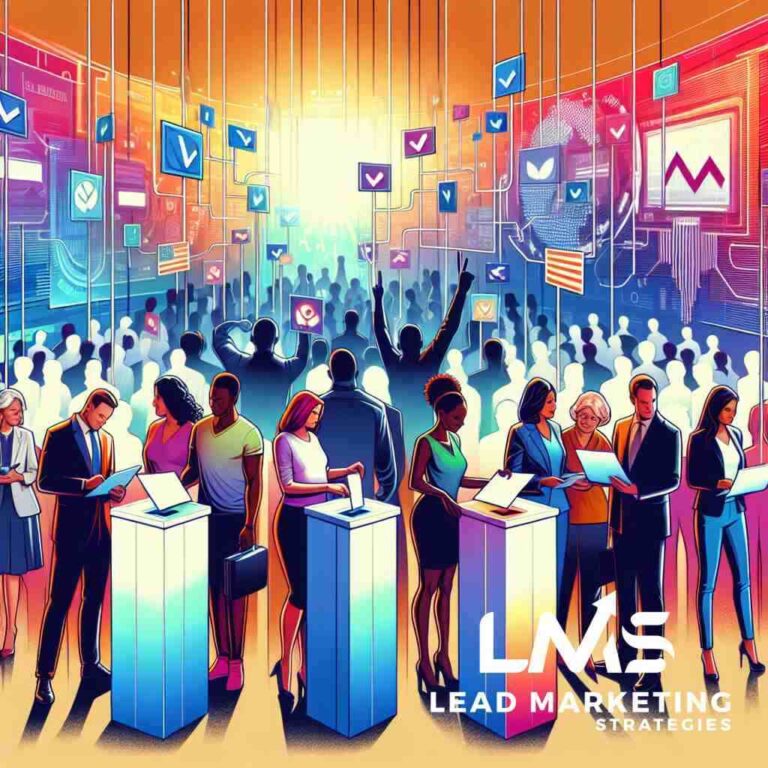
Political campaigns improve voter targeting with data by combining voter files, polling, turnout history, and digital behavior to find the right people, in the right places, with the right message. That turns guesswork into precinct-level targeting, sharper persuasion, and better turnout.
If you are looking at a race and feeling the pressure, that is normal. The hard part is not collecting data. It is making the data say something useful before ballots start moving.
Key Takeaways
- Voter targeting gets better when campaigns merge voter file data, polling integration, and turnout history into one targeting system.
- Voter data modeling and turnout propensity scoring help campaigns focus on persuadable voters instead of wasting money on low-value impressions.
- Political audience segmentation works best when message, channel, and geography match real turnout patterns.
- Digital voter outreach improves when email, social ads, direct mail, and GOTV strategies all use the same universe.
- Compliance matters. FEC regulations and election advertising disclosure rules can affect how far a targeting plan can scale.
Why some campaigns guess at voters and others see the map before Election Day
Campaigns stop guessing when they use voter file data, polling, and turnout history together. That combination shows who is likely to vote, who can still move, and which precincts deserve budget first. Strong campaign digital marketing starts there, because broad messaging wastes money while data-driven targeting puts effort where it can change votes.
How voter file data and polling integration turn gut instinct into precinct-level targeting
Voter file data gives campaigns the base map. Polling integration adds the opinion layer. When you combine the two, you can separate strong supporters, soft supporters, persuadables, and true opposition voters by precinct, not just by county or media market.
That matters in local political marketing, state-level election marketing, and national campaign strategies alike. A campaign in Suffolk County may need to target one set of suburban turnout patterns, while a congressional campaign across Long Island needs a different split between early voting outreach and absentee ballot marketing. On the projects we build near the Northgate Shopping Center in Commack, the biggest wins usually come from this simple move: stop treating every voter the same.
A good example is a small-town race where the campaign assumed older voters were the easiest path to turnout. The data showed something different. One ward had reliable seniors, but another had younger homeowners who were voting consistently during early voting windows. Once the campaign shifted direct mail and digital voter outreach toward that second group, the message landed faster and with less waste.
For solid public data on digital behavior and media use, teams often reference Pew Research and pair it with local voter history. That gives campaign teams a better view of where election social media marketing and political direct mail can work together instead of competing for attention.
Why campaign digital marketing works better when voter segmentation matches real turnout patterns
Campaign digital marketing works best when segmentation follows turnout, not just demographics. Age, party registration, and ZIP code help, but they do not predict action by themselves. The stronger model looks at voting frequency, issue interest, persuasion status, and whether someone is more likely to vote early, on Election Day, or by absentee ballot.
Here is the part most campaigns miss: a large audience is not a valuable audience. A smaller list with stronger turnout patterns often performs better in political advertising strategies, especially when the campaign has to protect budget for the final stretch.
Use this simple targeting ladder:
- Base universe: registered voters and known supporters.
- Turnout universe: people who have voted in similar elections.
- Persuasion universe: voters with movement potential.
- Get-out-the-vote universe: supporters who still need a reminder and a push.
That sequence helps campaigns tighten voter engagement strategies and protect spend. It also makes campaign website development, political content marketing, and political email marketing more useful because each channel speaks to a specific voter group instead of the same broad crowd.
The data engine behind sharper voter targeting and cleaner persuasion
The real engine is voter data modeling. Campaigns use predictive turnout modeling, turnout propensity scoring, and audience segmentation to decide who gets contact, how often, and through which channel. When done well, that reduces waste, strengthens persuasion, and makes GOTV strategies more efficient across digital and field programs.
How voter data modeling, predictive turnout modeling, and turnout propensity scoring tighten your universe
Voter data modeling helps campaigns estimate who will show up and who will move. Predictive turnout modeling uses past voting behavior, demographic markers, and engagement data to score each voter’s likelihood to participate. Turnout propensity scoring then turns that into a practical action list for paid media, volunteer calls, canvassing, and political direct mail. This is where campaign budget optimization gets real. A race does not win because it contacts everyone. It wins because it contacts the right people enough times to matter. That is why campaign teams in Commack, Long Island, and beyond often pair modeling with our political SEO services and campaign website design to keep the same message across search, landing pages, and donation flows. The strongest programs also feed the model back into fundraising marketing. If a donor segment is more likely to support a message issue, that segment can get tailored asks. If a voter segment responds better to local proof, the campaign can adjust copy, video, and field language before the budget gets burned. 
Targeting layerWhat it tells youBest useVoter fileWho the voter isBaseline universePollingWhat the voter thinksPersuasion messagingTurnout modelWho is likely to voteGOTV prioritizationEngagement dataWho respondedChannel optimizationFor campaign teams dealing with compliance or public filings, it also helps to check the Federal Election Commission before scaling ad buys or changing disclaimer language. Good targeting is only useful if it stays inside election advertising compliance.
Where political audience segmentation, lookalike audience targeting, and microtargeted campaign messaging actually change results
Political audience segmentation matters because not every voter needs the same proof. Some voters care about taxes. Others care about schools, local roads, public safety, or a candidate’s reputation for steadiness. Microtargeted campaign messaging lets you match those concerns without sounding fake or scattered.
Lookalike audience targeting extends that idea into digital platforms. A campaign can build audiences from volunteers, recurring donors, petition signers, or reliable primary voters, then find similar users for social media advertising for elections or PPC for candidates. That works especially well in down-ballot marketing, where name recognition is low and every efficient impression counts.
A small campaign we worked with in Suffolk County had a classic problem. Their mail pieces were fine, but their digital ads were too generic. Once they split the audience into three groups – persuadables, supporters, and turnout-only voters – the creative changed. Supporters saw donation asks, persuadables saw issue-based campaign branding, and turnout voters saw simple reminders with election day strategy messaging. Response improved because each group got one job, not five.
If you want a deeper look at how modeling and targeting fit together, How Voter Data Analysis Drives Success breaks down the process in plain language. It is also where political audience segmentation becomes less abstract and more practical for state, local, and federal races.
What a campaign must do next when data starts pointing the way
Once the data points clearly, the campaign has to connect channels fast. Digital voter outreach, political email marketing, social media advertising for elections, and direct mail should reinforce one message, one universe, and one voting action. If those pieces do not line up, the campaign leaks budget and loses momentum.
How to connect digital voter outreach, political email marketing, and social media advertising for elections without wasting budget
The best campaigns do not treat email, social, and mail as separate silos. They use one voter list, one message map, and one timing plan. That means political email marketing can push absentee ballot deadlines, social media advertising for elections can reinforce the same deadline, and political direct mail can anchor the message for older voters or lower-frequency voters.
A practical sequence looks like this:
- Use email for fast reminders, donor asks, and volunteer shifts.
- Use social ads for persuasion, repeated exposure, and issue framing.
- Use direct mail for credibility, senior voters, and message retention.
- Use video to humanize the candidate and explain the issue quickly.
- Use phone and canvass to close the loop on people the data says can still move.
That kind of integrated work is where our campaign digital advertising and social media marketing services can help. The point is not to add more channels. The point is to make each channel do one clear job inside a larger voter engagement strategy.
You should also keep campaign website development tight. A weak website hurts persuasion, fundraising, and volunteer conversion. A clean landing page with the right message, clear donation path, and strong candidate web design makes every click more valuable. The same goes for political video production, reputation management for politicians, and crisis communication for politicians when an attack hits and the campaign needs a fast response.
For teams comparing costs, Political Campaign Marketing Cost helps frame what is realistic for local political marketing, state-level election marketing, and national campaign strategies. If you are running in Commack, across Long Island, or in another state, cost should match the size of the voter universe and the number of channels you can actually manage well.
Political Marketing Strategies focuses on this exact kind of work: political marketing services, voter targeting, campaign branding, fundraising marketing, and reputation management for politicians. If you want a team that works only in campaigns and public affairs, and you want help building a data-based plan that fits your race, the next move is simple. Call +1 833-532-3100 or download the Political Marketing Strategies app to book a consultation and organize your targeting, outreach, and budget in one place.
Frequently Asked Questions
How do political campaigns improve voter targeting with data?
They use voter files, turnout history, polling, and digital behavior to divide voters into groups that are more likely to respond. Then they match each group with the right message and channel. That usually means better voter engagement strategies, less wasted spend, and stronger GOTV results.
What is voter data modeling in a campaign?
Voter data modeling is the process of scoring voters by turnout likelihood, persuasion potential, and issue interest. Campaigns use it to decide who gets email, mail, calls, ads, and door knocks. It is one of the core tools behind precinct-level targeting and smarter campaign budget optimization.
Is political audience segmentation legal?
Yes, if it follows election laws, platform rules, and disclosure requirements. Campaigns still need to follow FEC regulations, state election laws, and ad disclaimer rules. Data use also has to stay within privacy, vendor, and platform limits. Always review compliance before scaling targeting.
Do local campaigns need the same data tools as congressional campaigns?
Not the same scale, but many of the same methods. A city council race may use simpler turnout propensity scoring and smaller lookalike audiences. A congressional campaign may need more advanced segmentation, more creative testing, and a larger cross-channel voter identification system.
Which channels work best for voter targeting?
The strongest mix is usually political email marketing, social media advertising for elections, and political direct mail, supported by canvassing and phone outreach. The right mix depends on the district, turnout patterns, and whether the campaign is focused on persuasion, fundraising, or GOTV.
How much does political marketing usually cost?
Costs vary based on race level, ad volume, and service scope. Local campaigns can spend far less than federal races, but even small races need enough budget for a website, list work, creative, and targeting. For practical planning, review campaign marketing packages and match them to your universe size.
Can a campaign use AI for voter targeting?
Yes, but only as a support tool. AI can help sort data, test message versions, and spot patterns faster. It should not replace human judgment, compliance review, or field strategy. For a deeper look, see What Does AI Mean for Voter Data Analysis?
Schema hint: add FAQPage markup to this section, plus Article schema and LocalBusiness schema for Commack, New York.

The Political Marketing Strategies Team
Our team of marketing experts specializes in helping political campaigns grow their businesses through strategic digital marketing, SEO, and customer acquisition.
View all articles