

The Spring 2026 Grassroots Imperative: Cultivating Authentic Voter Connections
Why Grassroots Strategy is the Bedrock of Modern Political Success
In contemporary politics, a sophisticated grassroots strategy is the essential foundation for any campaign aiming for victory. While digital advertising creates broad awareness, authentic voter connections are forged through genuine, personal interactions at the local level. This ground game development directly influences voter enthusiasm and, ultimately, voter turnout. A successful campaign understands that trust is earned door by door and conversation by conversation, not just through screen impressions. Consequently, investing in a robust grassroots infrastructure is the most reliable method for securing commitments and activating a loyal base. For candidates ready to win, mastering these grassroots campaign strategies for spring elections is the definitive path to building unstoppable momentum.
Moving Beyond Digital Noise: The Unmatched Value of Human Touch
The digital landscape is saturated, making it difficult for political messages to break through the constant noise. This environment underscores the unparalleled value of face-to-face voter contact and authentic community engagement. Personal connection politics, facilitated by dedicated volunteers, cuts through the algorithmic clutter to deliver messages with credibility and empathy. Voters are more likely to support a candidate they have met personally or who has been endorsed by a trusted neighbor-a core tenet of relational organizing. The human touch provided by grassroots organizing becomes a campaign’s most powerful differentiator and persuasion tool, transforming passive observers into active advocates and creating a network of support that digital tactics alone cannot replicate.
Aligning Spring Campaign Momentum with Community Rhythms
Spring presents a unique strategic window for campaigns as communities emerge from winter and engage in local events, school activities, and neighborhood gatherings. Aligning a campaign’s rhythm with this natural community cycle is a critical component of effective spring campaign planning. This is the ideal time for voter registration drives, community listening sessions, and participatory events that feel organic rather than intrusive. A thoughtful local election strategy leverages this season of renewal to frame a message around growth, opportunity, and community investment. By synchronizing outreach with these natural community rhythms, a campaign demonstrates cultural competence and a genuine commitment to local issues advocacy.
How Lead Marketing Strategies Embeds Grassroots Excellence into Every Campaign
At Lead Marketing Strategies, we believe grassroots excellence is not a standalone tactic but the core philosophy integrated into every aspect of our political campaign management services. Our approach begins with a deep analysis of local voter data and community dynamics to build a customized ground game. We then provide the tools, training, and ongoing management to execute a flawless field operation, from volunteer recruitment to voter commitment tracking. Our team’s expertise ensures that grassroots efforts are not just busy work but a precisely targeted engine for voter persuasion and mobilization as part of your overall political marketing solutions. We transform the complex challenge of grassroots organizing into a measurable, scalable, and winning component of your campaign.
1) Hyper-Localized Door-to-Door Canvassing Architectures
Precision Targeting Beyond Basic Voter Files: Micro-Targeting Voters by Neighborhood
Effective door-to-door canvassing begins long before a volunteer steps onto a porch; it starts with intelligent, hyper-local precision targeting. Moving beyond generic voter files, sophisticated micro-targeting involves layering data to understand specific neighborhood concerns, voting histories, and demographic shifts. This process allows a campaign to prioritize doors where conversations will have the highest impact, maximizing resource efficiency. For instance, you might target households with a history of voting in spring primaries or families in neighborhoods affected by a specific local issue. This strategic focus ensures that every knock has purpose, driving higher conversion rates and more efficient use of volunteer time for your spring election cycle planning.
Crafting Persuasive Door Knocking Scripts for Spring Issues
A script is not a rigid monologue but a flexible framework designed to guide authentic conversations about spring issues. Effective door knocking scripts are tailored to address hyper-local concerns, from property taxes and school budgets to park renovations and road repairs common in the spring season. They equip volunteers with key talking points, persuasive responses to common objections, and clear calls to action, whether it’s requesting a yard sign or securing a vote commitment. The best scripts also include open-ended questions to facilitate community conversation starters, allowing voters to share their priorities. This approach transforms a brief visit into a meaningful dialogue, building voter trust and gathering invaluable voter sentiment analysis for the campaign.
Integrating Digital Tools with Boots on the Ground for Real-Time Data Collection
The modern canvass is a seamless blend of analog warmth and digital efficiency. Integrating digital tools with boots on the ground means equipping volunteers with mobile apps that provide walk lists, script guidance, and, most importantly, allow for real-time data collection. As volunteers have conversations, they can immediately input voter support levels, specific issues raised, and commitment promises directly into a centralized campaign database. This live grassroots data collection enables campaign managers to monitor progress, shift resources dynamically, and initiate follow-up actions instantly. This synergy between personal outreach and technology creates a powerful feedback loop, making your entire field operation more agile, informed, and effective.
Volunteer Training Protocols for Safety and Maximum Impact
Comprehensive volunteer training is non-negotiable for a safe, professional, and impactful canvassing operation. Effective volunteer training protocols must cover essential door-to-door safety protocols, including buddy systems, awareness of surroundings, and clear guidelines for disengaging from hostile interactions. Beyond safety, training focuses on the art of the conversation: how to introduce the candidate, actively listen, persuasively communicate key messages, and properly document interactions. Role-playing exercises build confidence, while clear campaign volunteer guidelines ensure message consistency and brand representation. Investing in this training empowers volunteers, reduces attrition, and ensures every voter contact advances the campaign’s goals.
From Contact to Commitment: Voter Persuasion Techniques That Convert
The ultimate goal of a canvass is to move a voter from a casual contact to a firm commitment. Mastering voter persuasion techniques involves understanding motivational psychology and employing proven methods. This includes connecting campaign values to the voter’s personal identity, using social proof like neighborhood endorsements, and making a direct, personal ask for their vote. Effective volunteers learn to identify soft supporters and employ tailored arguments to solidify their support. The conversation should conclude with a clear next step, such as signing a support card, taking a yard sign, or agreeing to a reminder call on election day. This disciplined approach turns fleeting interactions into concrete gains for your voter identification and commitment tracking system.
2) Volunteer Mobilization and Relational Organizing Ecosystems
Building Scalable Local Volunteer Networks from the Ground Up
A campaign’s volunteer force is its lifeblood, and building scalable local volunteer networks requires intentional, phased development. Start by identifying and recruiting a core group of committed neighborhood team leaders who have deep social roots in their communities. These leaders then become the architects of their own micro-teams, using their personal networks to recruit additional volunteers in a sustainable, exponential model. This precinct organizing approach ensures coverage and trust across all geographic areas of the district. Providing these teams with clear goals, simple tools, and regular support allows the network to grow organically without overwhelming central campaign staff. This methodology creates a resilient and expansive grassroots infrastructure capable of powering all facets of voter outreach.
The Art of Volunteer Recruitment and Skill-Based Empowerment
Successful volunteer recruitment moves beyond generic calls for help to a targeted appeal based on individual skills and interests. The art lies in identifying specific roles-data entry, social media content creation, event planning, or canvassing-and recruiting people whose talents align. Skill-based empowerment means giving a graphic designer ownership of campaign literature or a teacher the lead on a forum about education policy. This approach not only fills crucial roles but also increases investment and satisfaction, as volunteers see their unique contributions making a direct impact. Clearly communicating these micro-volunteer opportunities during recruitment attracts a more diverse and capable team, turning supporter passion into professional-grade campaign execution.
Leveraging Relational Organizing to Amplify Authentic Messaging
Relational organizing is the strategic amplification of a campaign’s message through the most credible messengers available: a voter’s own friends, family, and neighbors. This tactic leverages existing trust networks to cut through political cynicism. Campaigns provide supporters with easy-to-use tools to identify their personal contacts in the voter file, along with guidance on how to have authentic conversations via text, email, or in person. This peer-to-peer advocacy generates a powerful ripple effect of endorsement that no paid advertisement can match. It formalizes the natural process of political discussion, transforming every supporter into an effective advocate and exponentially expanding a campaign’s reach with inherent credibility.
Volunteer Retention Through Appreciation and Leadership Development
Acquiring volunteers is only half the battle; retaining them through the long campaign cycle is where many efforts falter. Proactive volunteer retention requires a culture of consistent appreciation and clear pathways for leadership development. Simple, sincere thank-you notes, public recognition at events, and volunteer appreciation strategies like thank-you dinners or branded apparel make people feel valued. Furthermore, identifying and nurturing volunteer leaders by giving them more responsibility-such as managing a phone bank team or coordinating a neighborhood canvass-fosters ownership and commitment. This investment in volunteer leadership development creates a cadre of experienced advocates who can sustain the campaign’s momentum and form the backbone of future political efforts.
Creating a Self-Sustaining Grassroots Infrastructure
The end goal of volunteer mobilization is to create a self-sustaining grassroots infrastructure that operates with minimal top-down direction. This is achieved by decentralizing authority, providing teams with the resources and training they need to plan and execute their own localized activities. Empowered neighborhood teams can organize their own door hanger campaigns, community conversation starters, and voter registration drives based on local knowledge. Central campaign staff then shift from managers to facilitators and supporters, providing data, materials, and solving larger logistical problems. This model not only builds local political networks that endure beyond a single election but also ensures the campaign apparatus is resilient, adaptive, and deeply connected to the community it serves.
3) Community-Centric Event and Coalition Building Frameworks
Designing Impactful Community Listening Sessions and Issue Forums
True community engagement begins with listening, not talking. Designing impactful community listening sessions and issue forums positions a campaign as attentive and responsive. These events should be hosted in neutral, accessible spaces and structured to prioritize voter voice over candidate speech. A skilled moderator can guide discussions on local concerns, from public safety to economic development, ensuring a productive dialogue. This process provides invaluable community feedback integration, revealing the nuanced priorities that polls often miss. For the campaign, these forums are not just about gathering information; they are powerful opportunities for voter trust building, demonstrating a genuine commitment to understanding and addressing the community’s needs.
Strategic Coalition Building with Local Leaders and Organizations
No campaign is an island, and strategic coalition building multiplies credibility and reach exponentially. This involves identifying and forging alliances with respected local leaders, faith groups, civic associations, business alliances, and non-profit organizations. The goal is to establish community partnerships based on shared values and mutual interests, not merely transactional endorsements. A thoughtful local endorsement strategy brings these groups into the fold early, seeking their input and offering them a stake in the campaign’s success. Their formal endorsements then serve as powerful validators, lending their hard-earned trust to a candidacy and opening doors to their member networks, which is a force multiplier for any grassroots mobilization effort.
Executing High-Visibility Voter Registration and Engagement Events
Spring is a prime season for executing high-visibility voter registration and engagement events that combine utility with celebration. Partnering with local festivals, farmers markets, or sports events to set up registration booths places a campaign where the community already gathers. These events should be staffed by knowledgeable, enthusiastic volunteers who can both register voters and have meaningful policy conversations. Adding an element of fun-like a prize wheel or photo booth with a campaign slogan-increases draw and positive association. This tactic serves a dual purpose: it directly increases the voter roll while simultaneously boosting local political visibility and building a reputation for a campaign as active and accessible.
House Party Fundraising for Grassroots Donor Engagement
House party fundraising is a quintessential grassroots fundraising tactic that builds donor relationships far beyond a simple online transaction. These intimate gatherings, hosted by supporters in their homes, allow a candidate to connect personally with a curated group of neighbors and community members. The setting fosters a sense of exclusivity and shared purpose, making attendees more likely to contribute and become long-term supporters. The conversation can delve deeper into the candidate’s vision, creating a cohort of highly informed advocates. This method of grassroots donor engagement is exceptionally effective for building a sustainable small-donor base, as it focuses on community relationship building and personal investment rather than impersonal donation links.
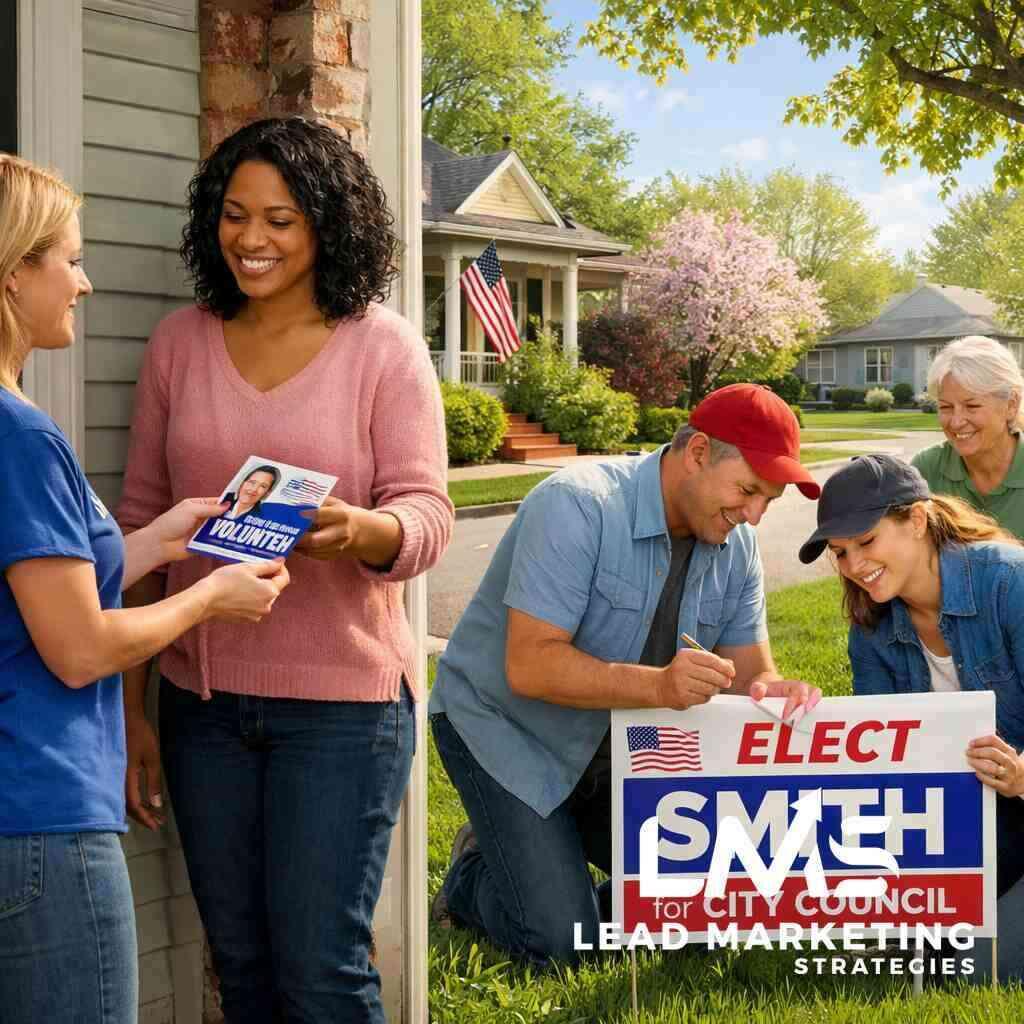
Storytelling and Campaign Visibility Through Localized Events
Every local event is a stage for campaign storytelling and enhanced visibility. Whether it’s a town hall, a neighborhood clean-up, or a small business tour, each should be designed to generate positive, shareable narratives and visuals. Highlighting a specific local problem and showcasing the candidate’s hands-on involvement creates a powerful story of commitment and action. Ensuring professional photography and videography captures these moments provides content for grassroots social media, email newsletters, and press releases. This strategic approach to campaign storytelling through localized events transforms routine activities into compelling proof points of a campaign’s values and work ethic, steadily building a narrative of authentic community engagement.
4) Integrated Grassroots Digital and Communication Channels
Synchronizing Peer-to-Peer Texting and Phone Banking with Field Operations
Digital outreach must not operate in a silo; its true power is unlocked when synchronized with traditional field operations. Peer-to-peer texting and phone banking strategies should be informed by and directly support door-knocking efforts. For example, volunteers can send personalized text blasts to confirm attendance at a community forum the day after flyers are dropped in that neighborhood. Conversely, data from canvassing-identifying undecided voters-can create targeted lists for a specialized phone bank persuasion script. This integration creates a cohesive communication stream, surrounding voters with consistent messaging across multiple touchpoints. Managing this multi-channel outreach requires robust volunteer coordination systems to ensure seamless handoffs and avoid contact fatigue.
Grassroots Social Media for Community Dialogue and Supporter Activation
Grassroots social media should function as a digital town square for community dialogue, not just a one-way broadcast channel. This involves creating content that sparks conversation, such as polls on local issues, live Q&A sessions with the candidate, or highlighting volunteer stories. The goal is supporter activation, turning passive followers into active participants who comment, share, and create their own content. Campaigns can foster this by providing shareable graphics, hashtags, and challenges that encourage user-generated content. This approach builds a vibrant online community that mirrors and extends the offline ground game, making it a critical component of modern social media campaigning for deepening engagement and organic reach.
Using Voter Data Analysis to Inform Personal Voter Outreach
The bridge between broad data and personal connection is sophisticated voter data analysis. By analyzing voting history, demographic information, consumer data, and issue survey responses, campaigns can build detailed models to predict voter behavior and concerns. This intelligence directly informs personal voter outreach, allowing a volunteer to know if they are speaking to a frequent primary voter, a parent concerned about schools, or a retiree focused on healthcare. Armed with this knowledge, conversations can be immediately relevant and persuasive. This data-driven approach ensures that every interaction is tailored and efficient, maximizing the impact of both digital messaging and face-to-face contact.
Campaign Literature and Yard Sign Distribution as Visibility Tactics
While sometimes viewed as traditional, campaign literature and yard sign distribution remain highly effective visibility tactics when executed strategically. Literature drops should be targeted, following canvassing efforts to reinforce personal contact with a tangible piece of information. Yard signs are not just placards; they are public endorsements that create a sense of momentum and neighborhood political presence. A systematic yard sign distribution program, prioritizing high-traffic corridors and the lawns of known supporters, builds visual dominance. These tactics serve as constant, low-cost reminders of the campaign, reinforcing name recognition and signaling broad community support in a very visible way.
Managing Multi-Channel Outreach with Volunteer Coordination Systems
Coordinating a multi-channel outreach strategy across dozens or hundreds of volunteers demands professional-grade volunteer coordination systems. Modern platforms allow managers to schedule shifts for canvassing, phone banking, and texting from a single dashboard, preventing over-contact and volunteer burnout. These systems facilitate communication through dedicated volunteer communication platforms, enabling quick updates and fostering team spirit. They also track individual volunteer hours and accomplishments, which is essential for recognition and impact measurement. Implementing such a system transforms chaotic goodwill into a disciplined, measurable army, ensuring that every volunteer hour contributes effectively to the campaign’s unified goals for voter contact and persuasion.
5) Data-Driven Get-Out-The-Vote and Voter Cultivation Operations
Voter Identification and Commitment Tracking for Spring Turnout
The entire spring campaign builds toward one objective: securing votes on election day. This process begins with meticulous voter identification and commitment tracking. Every interaction-from a door knock to a phone call-must be logged with the voter’s stated level of support. Voters are then categorized into tiers: strong supporters, leaners, undecided, and opponents. This dynamic list becomes the campaign’s most valuable asset, allowing for precise resource allocation in the final phase. Strong supporters are targeted for get-out-the-vote reminders, while leaners receive additional persuasion efforts. This disciplined system ensures the campaign is having the right conversations with the right people at the right time to maximize spring turnout.
Precision Targeting for Get-Out-The-Vote Operations
A blanket GOTV effort wastes resources; precision targeting is what separates winning campaigns from the rest. In the final days, efforts must laser-focus on identified supporters who have a history of inconsistent turnout or who need logistical help to vote. Advanced voter data analysis can predict which supporters might need a ride to the polls or an absentee ballot reminder. Targeting these voters with personalized messages-a volunteer’s voice on a robocall or a personalized text with their polling place-dramatically increases the likelihood they follow through. This surgical approach ensures that campaign energy is converting identified support into actual votes, which is the ultimate measure of grassroots impact.
Voter Follow-Up Protocols to Build Lasting Political Relationships
Election day is not an end point but a milestone in building lasting political relationships. Implementing structured voter follow-up protocols after both the primary and general elections is crucial for long-term success. This includes thank-you calls or notes to volunteers and key supporters, sharing election result analysis with your coalition, and communicating with all voters about the outcome and next steps. For those who supported you, this reinforces their good decision; for those who didn’t, it keeps the door open for future engagement. This practice of sustained community relationship building transforms a transactional campaign into the foundation for a lasting political network, essential for governing and future re-election efforts.
Measuring Grassroots Impact with Advanced Campaign Metrics
To justify investment and guide strategy, you must measure grassroots impact with advanced campaign metrics that go beyond vanity numbers. Key performance indicators (KPIs) include contact conversion rates (door knocks to commitments), volunteer recruitment and retention rates, cost per voter contact, and, most importantly, voter turnout rates among targeted supporter groups. Comparing these metrics against past cycles and benchmarks provides clear evidence of what’s working. This grassroots impact measurement allows for mid-course corrections and demonstrates the tangible return on investment of field operations. It provides a data-driven narrative of success that is invaluable for future fundraising, planning, and proving the efficacy of your ground game.
Sustaining Momentum from Spring Mobilization to Election Day
The energy of a spring campaign launch must be carefully sustained through the summer and into the fall election. This requires a long-term plan for grassroots campaign adaptation and volunteer engagement to prevent burnout and disengagement. Strategies include organizing lower-intensity summer community service projects, hosting policy deep-dive meetings for core volunteers, and planning a compelling fall kick-off event to re-energize the base. Communicating a clear timeline and showing progress toward goals keeps volunteers invested. This focus on sustaining momentum ensures that the community networks, volunteer teams, and voter relationships built in the spring remain active, informed, and ready to execute a final, victorious push on election day.
Orchestrating Your Grassroots Victory with Expert Campaign Management
Why DIY Grassroots Campaigns Fall Short in the Modern Landscape
Attempting to manage a sophisticated grassroots campaign as a DIY project is a high-risk endeavor that often leads to missed opportunities and wasted resources. The modern landscape requires a fusion of data science, digital tool mastery, volunteer psychology, and local political nuance that is difficult for an untrained team to synthesize. Common pitfalls include inefficient targeting that demoralizes volunteers, poor data hygiene that renders voter files useless, and an inability to scale operations effectively. Without expert guidance on campaign volunteer guidelines and grassroots campaign metrics, efforts can feel busy but fail to move the needle on voter commitment. A professional approach is not an expense but an investment in efficiency and victory.
How Lead Marketing Strategies Provides End-to-End Grassroots Solutions
Lead Marketing Strategies provides comprehensive, end-to-end grassroots solutions that transform this complex challenge into a streamlined, winning operation. As your local political marketing agency, we handle every component, from initial voter data analysis and micro-targeting models to volunteer recruitment, training, and day-to-day management of field operations. Our team integrates peer-to-peer texting, digital advertising, and traditional canvassing into a unified strategy, all managed through our proprietary coordination systems. We embed grassroots excellence into the fabric of your campaign, ensuring your message of community engagement is delivered with authenticity and precision, maximizing impact at every stage of the election cycle.
From Strategy to Execution: Our Political Campaign Management Process
Our political campaign management process is a disciplined, phased approach that moves seamlessly from high-level strategy to flawless execution. It begins with a deep-dive consultation to understand your district, opponents, and core message. We then craft a customized grassroots plan with clear benchmarks, budgets, and roles. Our team takes the lead on executing this plan, providing you with a dedicated campaign manager who oversees volunteer coordination, data management, and daily operations. We provide regular, transparent reports on key metrics, allowing for strategic adjustments. This turnkey process removes the overwhelming logistical burden from you, freeing the candidate to focus on connecting with voters and sharing their vision.
Taking the Next Step: Book a Consultation to Launch Your Spring Campaign
The journey to a victorious spring campaign begins with a single, decisive step. We invite you to book a consultation for your campaign with the experts at Lead Marketing Strategies. In this strategic session, we will analyze your specific race, discuss the unique opportunities within your community, and outline a clear path to building a dominant grassroots operation. Our team, with its proven track record, is ready to provide the expertise and tools you need to win. Don’t leave the most critical component of your campaign to chance; partner with professionals who know how to strategize grassroots campaigns for maximum impact and deliver real results.
Frequently Asked Questions
Question: How can Lead Marketing Strategies help us implement the Top 5 Grassroots Campaign Strategies for Spring 2026 Elections, especially with volunteer mobilization and training?
Answer: At Lead Marketing Strategies, we provide end-to-end political campaign management that transforms the complex challenge of volunteer mobilization into a streamlined, scalable operation. Our process begins with building scalable local volunteer networks from the ground up, using a precinct organizing model to identify and empower neighborhood team leaders. We specialize in the art of volunteer recruitment and skill-based empowerment, ensuring each volunteer is placed in a role that maximizes their impact, from door-to-door canvassing to peer-to-peer texting. Our comprehensive volunteer training protocols cover everything from door-to-door safety protocols and persuasive conversation techniques to using our integrated digital tools for real-time data collection. We don’t just recruit volunteers; we create a self-sustaining grassroots infrastructure through leadership development and consistent appreciation, ensuring high volunteer retention and long-term community relationship building. Our expertise ensures your spring campaign planning is executed with precision, turning supporter passion into a professional-grade ground game.
Question: What makes your approach to door-to-door canvassing and voter persuasion different from a DIY campaign?
Answer: A DIY grassroots campaign often falls short because it lacks the sophisticated voter data analysis and strategic framework we provide. Our approach to door-to-door canvassing is built on hyper-localized precision targeting that goes far beyond basic voter files. We employ advanced micro-targeting by neighborhood, layering data to understand specific concerns and voting histories, which ensures our volunteers are knocking on the most impactful doors. We craft dynamic door knocking scripts tailored to spring issues and train volunteers in proven voter persuasion techniques that convert contacts into firm commitments. Crucially, we integrate digital tools with boots on the ground, enabling real-time grassroots data collection that immediately informs follow-up actions and resource allocation. This synergy between personal voter outreach and technology, managed through our professional volunteer coordination systems, creates an efficient and agile field operation that a DIY effort cannot replicate, maximizing your campaign’s visibility and voter trust building.
Question: Can you manage our entire grassroots digital and communication strategy, including social media and peer-to-peer outreach?
Answer: Absolutely. As a leader in communication technology and political marketing solutions, we specialize in synchronizing all grassroots digital and communication channels into a cohesive force multiplier. We manage integrated peer-to-peer texting and phone banking strategies that are directly informed by and support your field operations, creating a consistent stream of voter contact. Our team executes grassroots social media campaigns designed for community dialogue and supporter activation, turning followers into active advocates. We use voter data analysis to personalize all outreach, ensuring messages resonate. Furthermore, we manage multi-channel outreach through our professional volunteer coordination systems, scheduling shifts and tracking interactions to prevent voter fatigue. From campaign literature and yard sign distribution for local political visibility to leveraging digital tools for community conversation starters, we handle it all, ensuring your message cuts through the noise with authenticity and strategic precision.
Question: How do you ensure our spring campaign momentum is sustained through to Election Day with effective get-out-the-vote operations?
Answer: Sustaining momentum from spring mobilization to Election Day is a core component of our election campaign management services. We begin early with meticulous voter identification and commitment tracking, logging every interaction to build a dynamic list of supporter strength. This allows for precision targeting in the final critical phase, where our get-out-the-vote operations laser-focus on turning identified supporters into actual votes. We use advanced electoral analytics to predict which voters need reminders, rides, or absentee ballot help, and then execute personalized outreach. Our process includes structured voter follow-up protocols to build lasting political relationships beyond a single election. We measure grassroots impact with advanced campaign metrics, tracking conversion rates and turnout to prove ROI and guide strategy. By planning for long-term grassroots campaign adaptation and keeping volunteers engaged with clear goals and recognition, we ensure the community networks and enthusiasm built in the spring translate into a victorious voter turnout on Election Day.
Question: We’re interested in community-centric events and coalition building. How does Lead Marketing Strategies approach this?
Answer: Our approach to community-centric event and coalition building frameworks is designed to embed your campaign authentically within the local fabric. We start by designing impactful community listening sessions and issue forums that prioritize voter voice, a key tactic for voter trust building and community feedback integration. We then engage in strategic coalition building with local leaders and organizations, developing genuine community partnerships based on shared values rather than transactional endorsements. Our team plans and executes high-visibility voter registration and engagement events that align with spring community rhythms, boosting your local political visibility. We also orchestrate intimate house party fundraising events for deep grassroots donor engagement. Every event is an opportunity for campaign storytelling, and we ensure professional promotion and documentation to extend its reach. This comprehensive focus on community-centered campaigning and local issues advocacy demonstrates your commitment and builds the broad, credible coalition necessary for a winning spring election strategy.
Question: Why should a campaign choose Lead Marketing Strategies over other firms for grassroots campaign strategy development?
Answer: Campaigns should choose Lead Marketing Strategies because we offer a unique, integrated combination of local expertise, national experience, and technological innovation. Based on Long Island and serving all 50 states, we have been a top political marketing consulting firm since 2007, specializing in the very grassroots campaign strategies detailed in our blog. Unlike generalist firms, we provide end-to-end grassroots solutions, from initial voter data analysis and micro-targeting to daily volunteer management and GOTV execution. Our proprietary mobile app allows for unprecedented client collaboration and project management, putting you in control. We weave together grassroots organizing, volunteer mobilization, and digital tools into a single, seamless strategy. Our team acts as your dedicated campaign strategist and manager, providing the knowledge and resources to execute a dominant ground game. We don’t just offer political consulting services; we become an extension of your team, with a proven process designed to achieve and exceed all your political marketing and voter engagement goals.

The Political Marketing Strategies Team
Our team of marketing experts specializes in helping political campaigns grow their businesses through strategic digital marketing, SEO, and customer acquisition.
View all articles