
What Is Political PPC?
Political PPC is paid search and display advertising that puts a campaign’s message in front of voters at the exact moment they are looking. You bid on keywords, demographics, and locations, and your ad appears on Google, YouTube, and partner sites. Unlike a mailer that sits in a pile, political PPC reaches people while they are actively searching for information about an issue, a district, or a candidate.
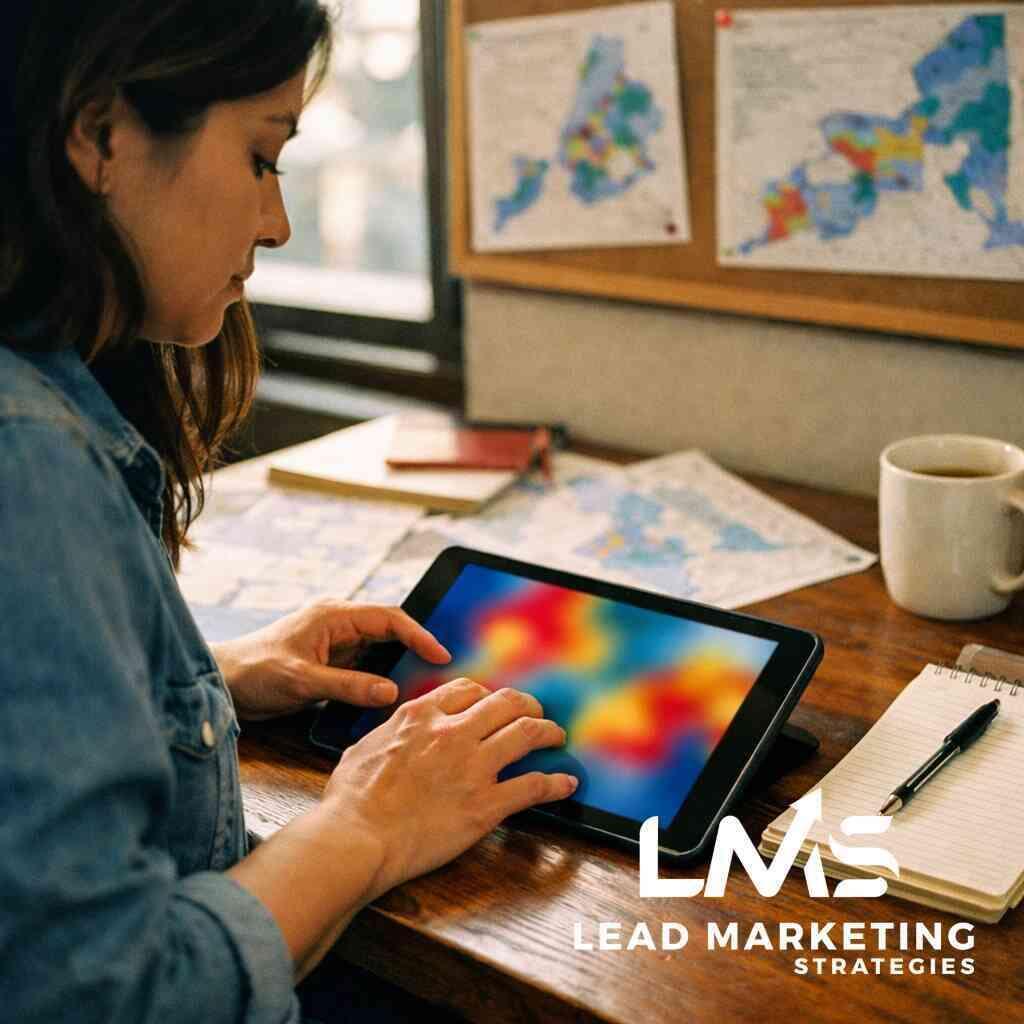
In New York, that distinction matters more than almost anywhere else. Voters here are bombarded with ads, and the ones who actually convert to volunteers, donors, and votes are the ones who see your message when their attention is already on the race. That is the job of political PPC, and it is one of the fastest ways to move a campaign from invisible to unavoidable.
How Does Political PPC Actually Work?
Political PPC works in four steps: you define your audience, you build keyword and placement lists, you write ads that match what voters are searching for, and you optimize based on real conversion data rather than clicks alone. The mechanics are the same as commercial PPC, but the targeting, compliance, and messaging are built for elections.
Here is what that looks like in practice:
- Audience targeting. You can target by congressional district, county, zip code, age, income, and issue interest. In New York that means a Manhattan renter and a Western New York homeowner can see very different ads from the same campaign.
- Keyword strategy. You bid on searches like “who is running for city council in [district]” or “candidate name voting record.” These are high-intent moments, and they are where political PPC earns its keep.
- Ad formats. Search ads, YouTube pre-roll, display banners, and remarketing all fall under the political PPC umbrella. Each one does a different job in the voter journey.
- Conversion tracking. You measure donations, volunteer signups, petition signatures, and email captures, not just impressions. If a click does not lead to an action, it is not working.
The campaigns that win are the ones that treat political PPC as a measurable system, not a one-time ad buy. In our experience, the difference between a strong PPC program and a weak one is almost always the quality of the tracking and the discipline of the optimization.
Why Does Political PPC Matter More in New York Than Almost Anywhere Else?
Political PPC matters more in New York because the state combines expensive media markets, dense and diverse voter populations, and some of the most competitive local races in the country. You are not just competing with other candidates. You are competing with every brand, nonprofit, and national PAC bidding on the same attention.
New York is also a state of contrasts. Upstate districts, Long Island suburbs, and New York City neighborhoods behave like completely different media markets. A message that lands in Buffalo can fall flat in Queens. Political PPC lets you run separate campaigns for each region without paying for wasted reach, which is exactly what a statewide or district-level race needs.
There is a timing factor too. New York primaries and special elections can compress a campaign’s entire paid media window into a few weeks. PPC can be live in days, adjusted hourly, and scaled up or down based on what the data says. That flexibility is hard to match with traditional media.
What Should a New York Political PPC Campaign Include?
A strong New York political PPC campaign should include geo-targeted search ads, YouTube and display video, remarketing to engaged voters, dedicated landing pages, and conversion tracking tied to fundraising and volunteer goals. Skip any one of those and you leave votes and dollars on the table.
Here is the structure we recommend:
- Search campaigns by district and issue. Separate campaigns for each race, county, or ballot measure so budget and messaging stay clean.
- YouTube video ads. Short, captioned spots that introduce the candidate and drive name recognition among voters who are not searching yet.
- Display and remarketing. Stay in front of people who visited your site or watched your video. This is where a lot of low-cost persuasion happens.
- Landing pages built to convert. Your lead generation system should capture emails, phone numbers, and volunteer interest, not just send people to a homepage.
- Compliance review. Political ad platforms require verification and disclaimers. Build that into your process from day one so nothing gets paused mid-campaign.
We often see campaigns spend their entire PPC budget on awareness and then wonder why donations are flat. Awareness is necessary, but it is not the finish line. The campaigns that raise money and build volunteer lists are the ones that design the whole path from ad to action.
How Do You Target Voters Without Wasting Budget?
You target voters without wasting budget by narrowing to geography, issue interest, and search intent first, then layering in audience segments only after the data proves they convert. Broad targeting feels good and performs badly for most campaigns.
In our experience, three levers do most of the work:
- Geography. Start at the district or precinct level. New York’s media markets are expensive, so every wasted impression costs real money.
- Search intent. Bid on candidate names, office names, and issue terms. Someone typing “how to register to vote in [county]” is a different voter than someone typing your opponent’s name.
- Negative keywords. Exclude terms that attract the wrong audience, like job seekers, journalists, and people researching other states. This one step alone can improve efficiency significantly.
Pair that with a paid social program on Facebook and Instagram and you cover both the voter who searches and the voter who scrolls. The two channels reinforce each other, and the combined data makes both smarter.
How Does Political PPC Fit With SEO and Content?
Political PPC fits with SEO and content because paid ads create immediate reach while search and content build durable visibility. Voters who see your ad often search your name afterward. If your organic presence is weak, that search ends in doubt instead of a vote.
This is where a lot of campaigns quietly lose ground. They buy ads, they get clicks, and then the voter lands on a thin website with no clear position on the issues. The fix is to build the organic foundation alongside the paid program. Our guide to how political marketing strategies improve candidate SEO walks through the fundamentals, and our content marketing services keep the site stocked with issue pages, bios, and press coverage that answer voter questions.
There is also an answer-engine angle now. Voters ask AI assistants who is running and what a candidate stands for. If your campaign is not structured to be quoted in those answers, someone else’s version of your record becomes the answer. Our AEO services address that directly, and it pairs naturally with a paid search program that captures the same questions.
What Does Political PPC Cost in New York?
Political PPC costs in New York vary widely by race, district, and competition, but campaigns should expect higher cost per click in dense media markets and lower costs in less contested areas. There is no honest flat number. Anyone who quotes one without asking about your district is guessing.
What we can tell you is how to think about the budget:
- Competitive statewide or citywide races require sustained spend across search, video, and display to stay visible.
- Local and district races can often win with a tightly targeted search and remarketing program at a fraction of the cost.
- Fundraising campaigns should be measured by cost per dollar raised, not cost per click. A higher click cost that produces donations can be the better buy.
The real question is not what PPC costs. It is what a vote or a volunteer is worth to your campaign, and whether the program is built to deliver them. We would rather build a smaller, sharper program that converts than a broad one that looks impressive in a report and does nothing on election day.
What Mistakes Do Campaigns Make With Political PPC?
The most common political PPC mistakes are weak landing pages, no conversion tracking, set-and-forget campaigns, and ignoring compliance requirements until ads get disapproved. Each one is avoidable and each one costs votes.
Here is what we see most often:
- Sending all traffic to the homepage. Voters who clicked an ad about a specific issue should land on a page about that issue.
- Judging success by clicks. Clicks are a means, not a result. Track donations, signups, and volunteer requests.
- Never adjusting. PPC rewards weekly attention. Pausing weak keywords and shifting budget to what works is most of the job.
- Ignoring the brand side. Voters check your reputation before they commit. A reputation management plan keeps the search results around your name clean and on message.
- Starting too late. PPC needs time to gather data. Launching two weeks before election day leaves no room to optimize.
How Do You Measure Whether Political PPC Is Working?
You measure political PPC by tracking cost per conversion, conversion rate by channel, donor and volunteer volume, and branded search lift over time. Impressions and click-through rate are diagnostic, not outcomes.
A simple scorecard works well: how many dollars came in, how many volunteer signups, how many email addresses, and how much branded search grew. If those four numbers are moving in the right direction, the program is doing its job. If they are flat while spend rises, something in the funnel is broken and it is usually the landing page or the targeting.
We also recommend reviewing search terms weekly. In our experience, campaigns routinely find 20 to 30 percent of their spend going to searches they never intended to target. Cleaning that up is the fastest win available in most accounts.
Frequently Asked Questions About Political PPC
Is political PPC allowed on Google and Meta?
Yes, with conditions. Google and Meta both allow political ads but require advertiser verification, identity confirmation, and proper disclaimers. Rules change, so the safest approach is to verify your campaign early and build compliance into your ad creation process rather than scrambling after a disapproval.
How quickly can a political PPC campaign go live?
A well-prepared campaign can launch in a matter of days once verification and landing pages are ready. Verification is usually the slowest step, which is why we tell campaigns to start the process well before they plan to spend.
Can political PPC target specific neighborhoods in New York?
Yes. You can target by zip code, city, congressional district, and in some formats by radius around an address. That granularity is one of the biggest advantages of PPC over broadcast and direct mail in a state as diverse as New York.
Does political PPC work for down-ballot and local races?
It often works best for down-ballot races. Smaller budgets go further when targeting is tight, and local voters search for local information. A city council or county race can build real name recognition with a focused search and remarketing program.
How does political PPC compare to direct mail?
PPC is faster, more measurable, and easier to adjust. Direct mail still has a role for saturation and persuasion, but PPC tells you exactly who responded and lets you follow up. Most strong campaigns use both, with PPC handling the high-intent moments.
Ready to Put Political PPC to Work in Your Race?
If you want a paid program that actually moves votes and dollars, our team can help. We build political PPC campaigns around your district, your budget, and your goals, and we connect them to the landing pages, tracking, and follow-up that make the spend count. You can book a free consultation and we will walk through your race together. Prefer to talk now? Call us at (833) 532-3100.
And if you want campaign tips and updates in your pocket, download our mobile app: iOS or Android.

The Political Marketing Strategies Team
Our team of marketing experts specializes in helping political campaigns grow their businesses through strategic digital marketing, SEO, and customer acquisition.
View all articles